THE FORCES
An aircraft on a string
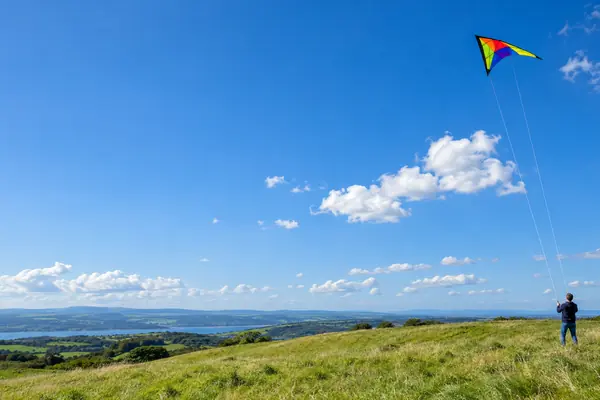
Three forces act on every kite: weight, line tension and the aerodynamic force, split into lift and drag. NASA notes they match an airliner's, with tension in place of thrust.
The physicsKITES, FORCES AND RULES
In UK law, your kite is an aircraft.
That is why there is a height limit, and why airfields and power lines matter. The physics is the same as for an airliner, with the line doing the job of the engines, and a few simple habits keep dual-line and power kites safe.
60 M without permission
THE SHORT ANSWER
The Kite Society notes that most rules
really apply to kites over 2 kg, but many apply to all.
THE FORCES
Three forces act on every kite: weight, line tension and the aerodynamic force, split into lift and drag. NASA notes they match an airliner's, with tension in place of thrust.
The physicsTHE RULES
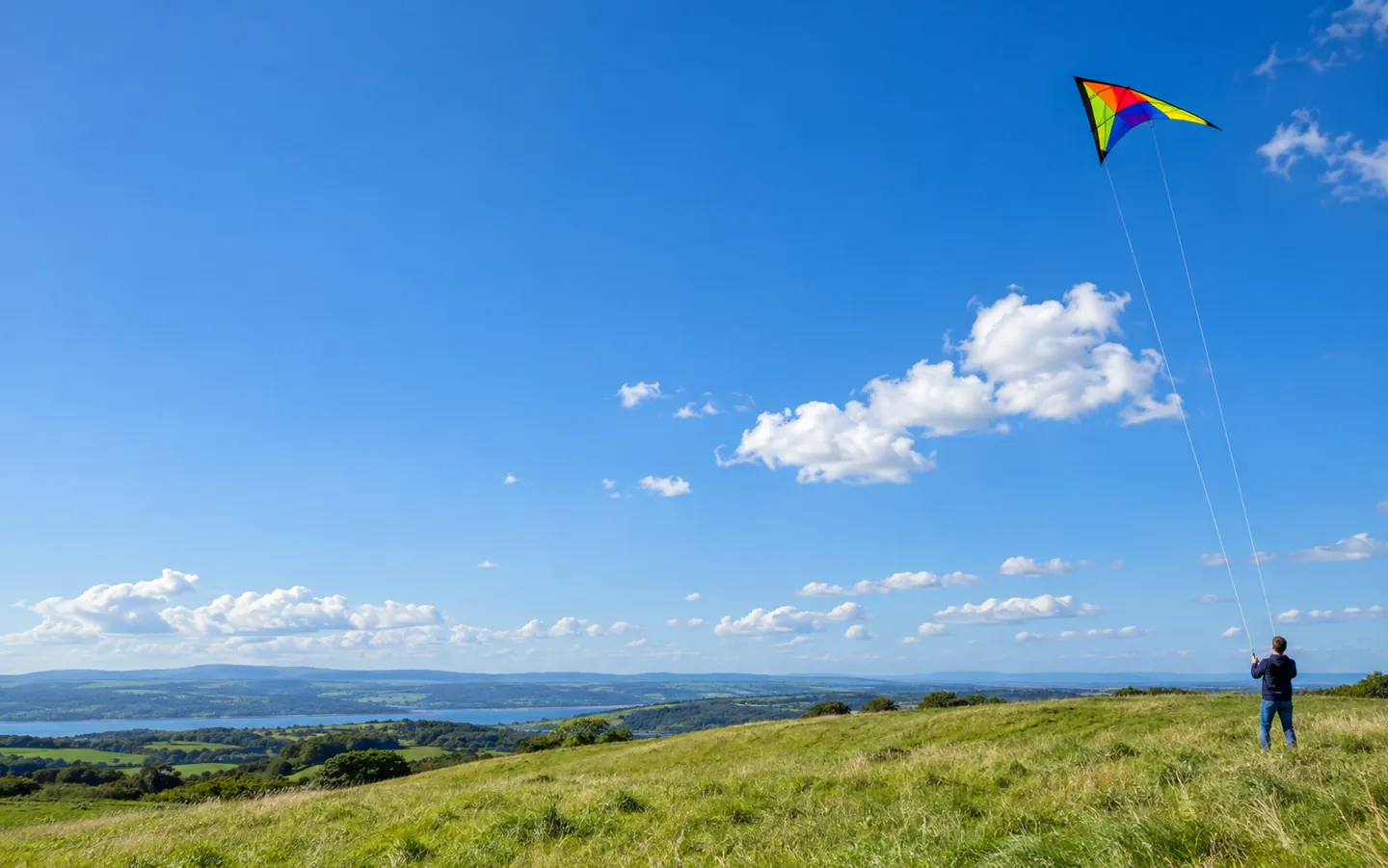
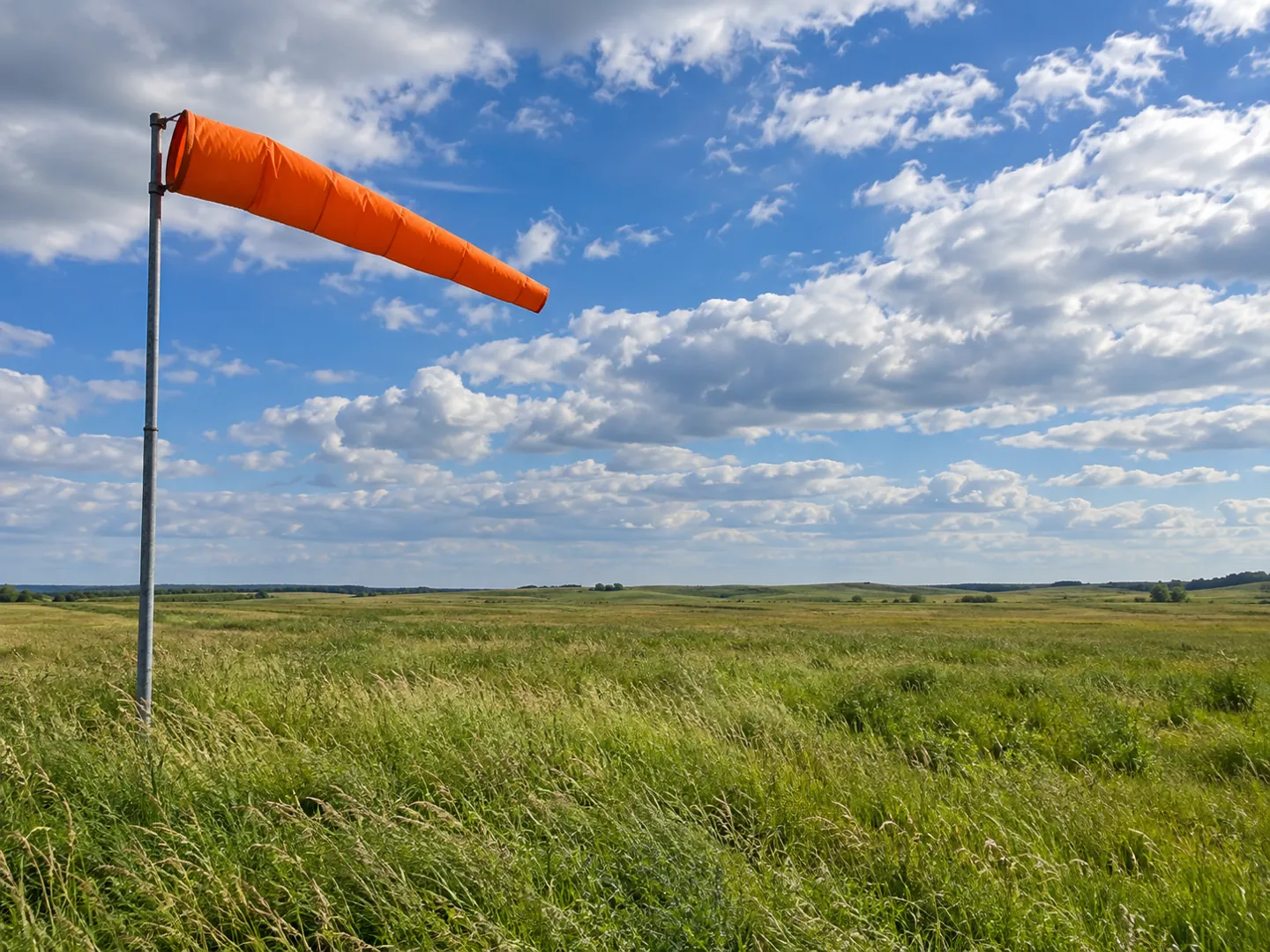
Under the Air Navigation Order 2016, a tethered kite needs CAA permission to go more than 60 metres above ground. Near notified aerodromes, tighter limits apply.
Where to flyTHE GRIP
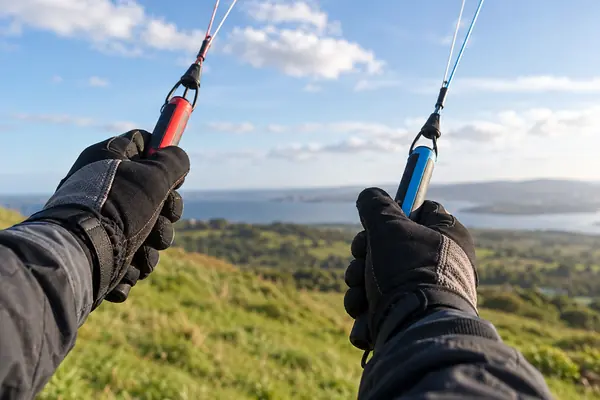
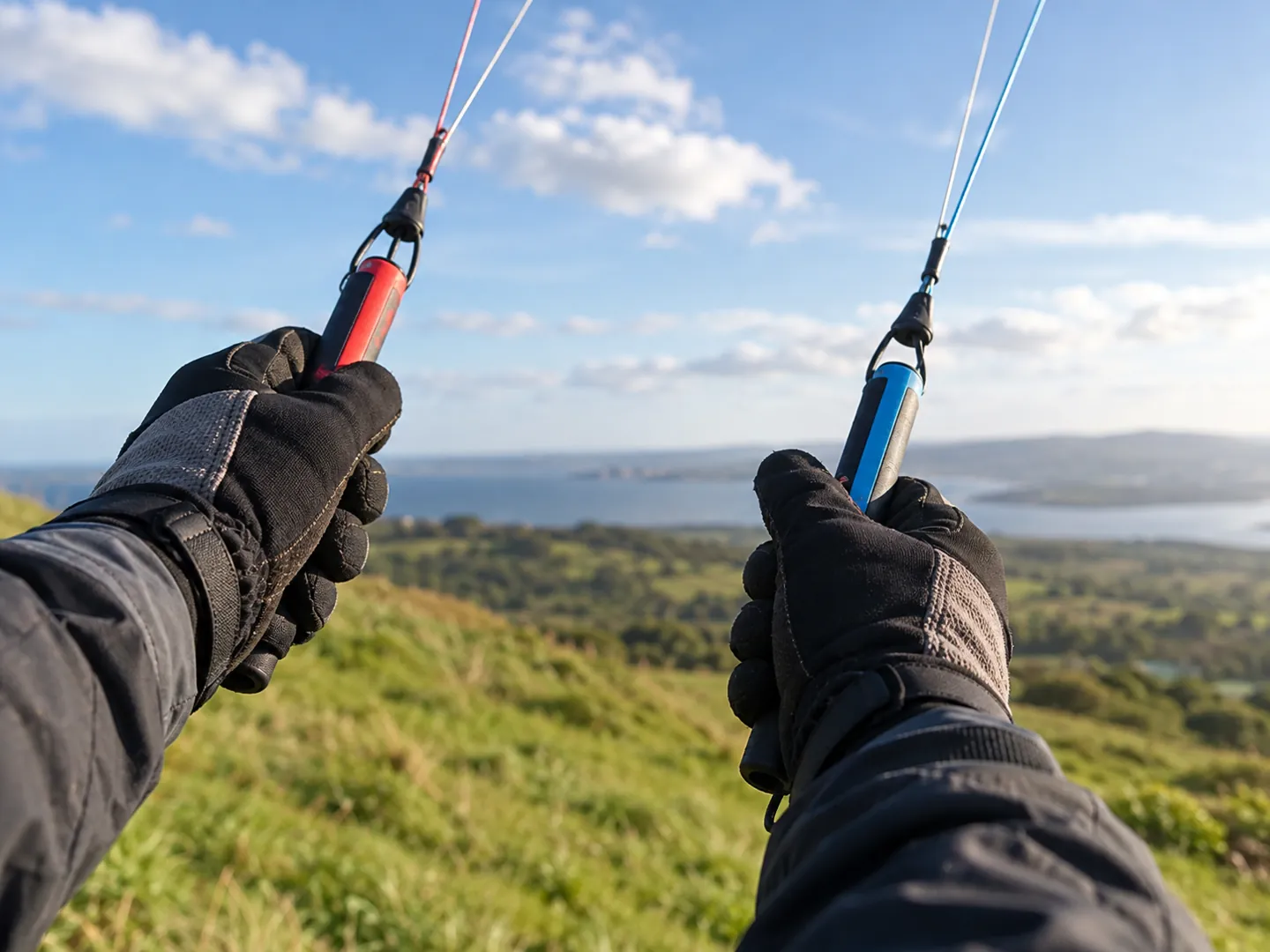
Dual and four-line kites can frighten animals, and power kites can be very dangerous if not flown properly. Wear gloves for strong-pulling kites, and consider lessons.
Safe flying habitsWHERE TO FLY
Where you fly matters as much as how. The bar shows how risky or restricted each place is, from the Air Navigation Order and the Kite Society's guidance.
From the Air Navigation Order 2016 article 92, the CAA's kite notification guidance and the Kite Society of Great Britain's rules and tips.
TWO NUMBERS WORTH KNOWING
Both come from
the Civil Aviation Authority.
60 m
Height above ground a kite may reach without CAA permission
No part of a tethered kite or its line may extend more than 60 metres above ground level without CAA permission, and it must not be a hazard to other airspace users.
AIR NAVIGATION ORDER 2016 · ARTICLE 92
14 days
Minimum notice for a Kite Permission
Events needing a Kite Permission should give at least 14 days' notice. The CAA usually issues a NOTAM to warn other airspace users, and does not currently charge for this.
CAA AIRSPACE REGULATION
Kites flown above 60 metres should carry red-and-white streamers at set intervals or, at night, groups of white and red lights on the line.
BEFORE YOU LAUNCH
These come from the Kite Society of Great Britain's safety tips for kite flying.
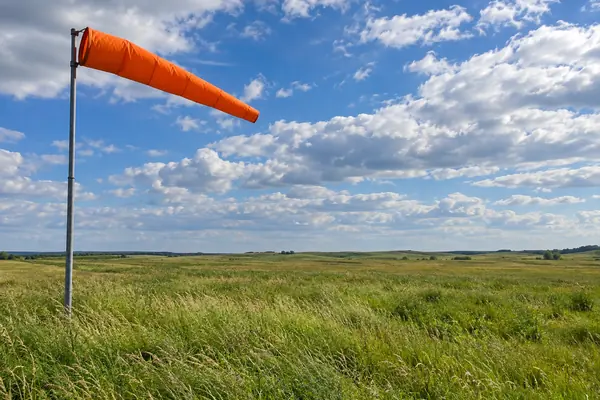
Read the instructions and check the wind range for your kite. Above it, the kite can become uncontrollable. The Beaufort scale helps you judge the wind.
Never fly in wet or stormy weather, as static can build up and travel down the line. Never use wire or anything metallic in the line.
It is easy to step back while watching the kite. Check for people, roads and even cliffs behind you.
Take away any discarded line and the bag the kite came in. Throw them away responsibly or recycle them.
THE PHYSICS
An aircraft rotates about its centre of gravity, but a kite is pinned by its bridle to the line, so it rotates about the bridle point, more like a door on its hinges. Where that point sits sets the angle the kite flies at.
Because kite forces mirror an aircraft's, the Wright brothers tested their theories by flying their aircraft as kites from 1900 to 1902. Lift acts at right angles to the wind, drag acts along it, and the line holds the kite against both.
Questions
Yes. Under article 92 of the Air Navigation Order 2016, no part of a tethered kite or its line may extend more than 60 metres above ground without CAA permission.
Within the traffic zone of a notified aerodrome during its operating hours, only by day in good visibility and with permission. The Kite Society advises keeping well away from airports.
Do not try to rescue it yourself. The Kite Society says to ask for help from the right people, such as the electricity company.
Static electricity can build up and be conducted down the line. That is also why you should never use wire or anything metallic in a kite line.
They can be very dangerous if not flown properly. The Kite Society recommends lessons for dual-line sport and power kites, and gloves for strong-pulling kites.
Sources
ABOUT THIS NAME
doodlestunts.com is part of the DoodleSale portfolio. It isn't in an auction right now, but you can ask about leasing it.